

Reverse Benchmarking:
Recognizing industry gaps & cross-sector insights for a true brand differentiator.
Our services
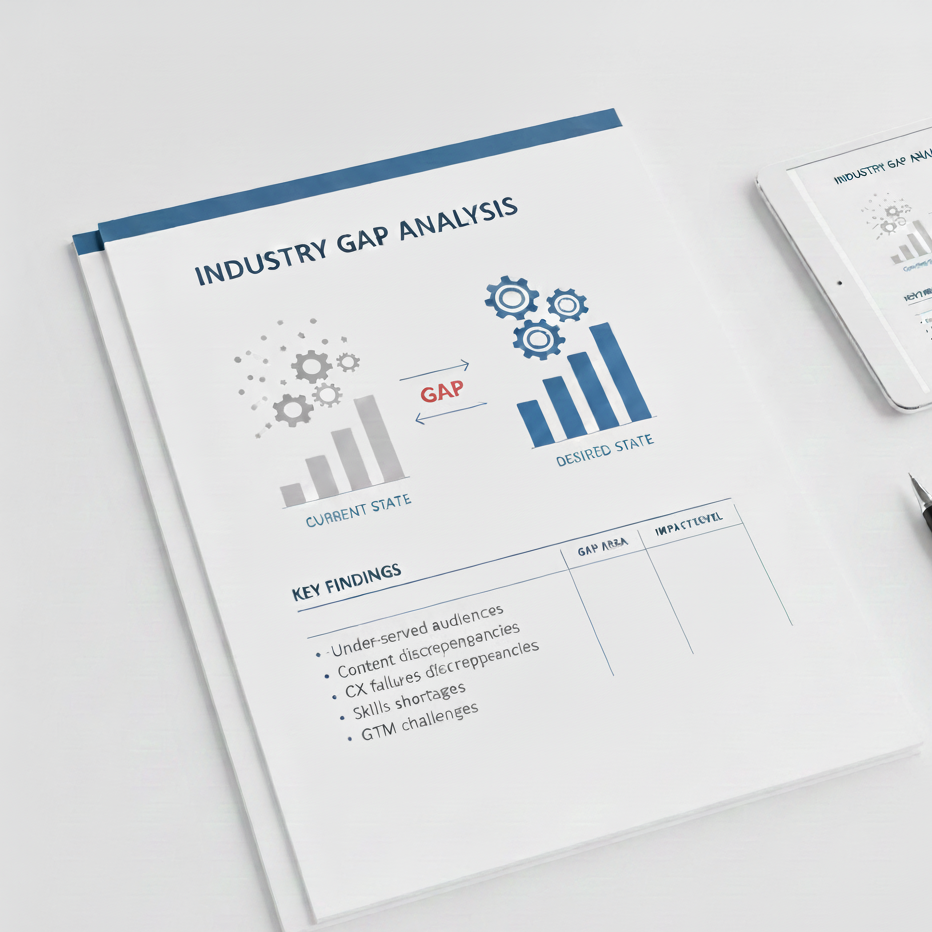
Industry Gap Analysis
See what your competitors are missing.
We analyze your sector not for its best practices, but for its failures, weaknesses, inefficiencies, and blind spots. By mapping out where the industry under-delivers, we surface white spaces for innovation, differentiation, and market leadership.

Cross-Sector Intelligence
Find solutions where others aren’t even looking.
We conduct targeted research across distant and adjacent industries to uncover models, technologies, and strategies that can be adapted to your market — giving you an unfair advantage.
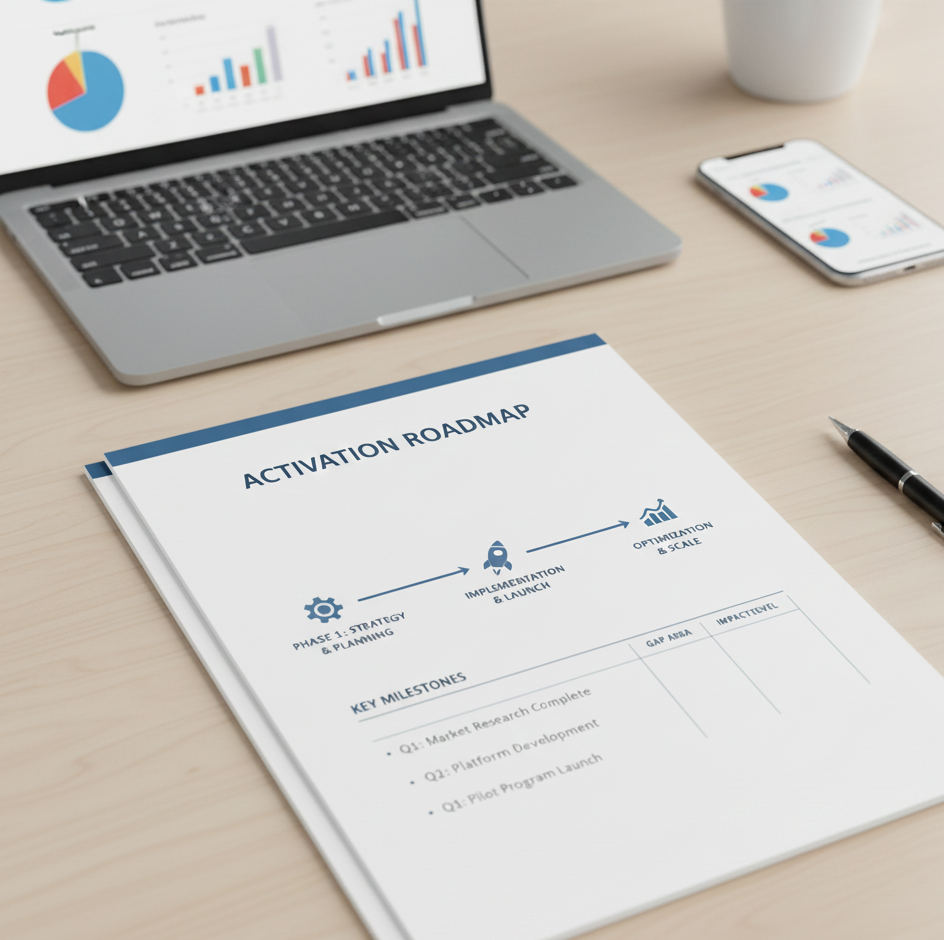
Activation
Turn insights into action.
Through highly interactive workshops, we engage your leadership and teams in translating reverse benchmarking insights into concrete strategies, pilots, and innovations.
What is Reverse Benchmarking?
Most benchmarking asks. “How do we stack up against competitors in our category?” That is useful, but it tends to produce incremental answers.
Reverse benchmarking flips the lens. It looks outside your category to find proven patterns your competitors are not using. Then it maps those patterns back onto your market to reveal blind spots. Those blind spots are where differentiated growth usually lives.If your category feels crowded, your messaging is converging, or your roadmap keeps drifting toward feature parity, reverse benchmarking is a way to create a cleaner set of options. Options grounded in what works elsewhere, not just what is familiar here.
Reverse benchmarking vs. traditional benchmarking
Traditional benchmarking:
Compares you to direct competitors.
Optimizes performance within the category’s existing assumptions.
Often yields incremental improvements and copycat tactics.
What reverse benchmarking delivers
Reverse benchmarking:
Compares your category to other categories that solved similar problems.
Identifies patterns, plays, and operating models that your competitors have not imported yet.
Produces differentiated bets, not just improvements.
Most clients want three things. Clarity on where the category is stuck. Proof that a different approach exists. A short list of moves they can actually execute.
A typical engagement produces:
A map of category assumptions and where they limit growth.
A set of cross-sector analogs with evidence for why they work.
A prioritized opportunity backlog. Each opportunity includes the customer problem, the external proof point, and a recommended experiment.
A narrative you can use internally. This is critical for alignment across product, marketing, and sales.
How we run it
We use a three-part approach that moves from diagnosis to action.
1. Industry Gap Analysis
We identify the category’s default assumptions and where customer needs are underserved. The output is a crisp “gap map” you can align around.
2. Cross-Sector Intelligence
We find adjacent or distant industries that solved comparable problems. Think pricing models, onboarding motions, trust signals, retention mechanics, channel strategy, or experience design. The goal is not inspiration. It is transferability.
3. Workshop Activation
We turn the insights into decisions. We prioritize a small set of moves, define experiments, and assign owners. This is where the work stops being interesting and starts being useful.
Case Studies
Most companies benchmark what others do well. We have helped find what others don’t do at all — and then help to act on it.
Take a look at our cases.

Reverse Benchmarking FAQ
What industries does reverse benchmarking work for?
Any category with competitive convergence. It’s especially useful in B2B SaaS, professional services, consumer brands, and marketplaces.
How is this different from competitive research?
Competitive research looks at what rivals are doing. Reverse benchmarking looks at what other industries learned that your rivals have not imported yet.
What do I get at the end of an engagement?
A gap map, cross-sector analogs, and a prioritized opportunity backlog with experiments and owners.
How long does it take?
Typical ranges are 2–6 weeks depending on scope and stakeholder availability.
Do you run workshops or just deliver a report?
Both. Workshops are where insights become decisions. If you only want a deck, you will usually get weaker adoption.
Can this inform product strategy as well as marketing?
Yes. The strongest outcomes happen when product, marketing, and sales are in the same room for prioritization.
Contact Us
Ready to see differently? Fill out some info and we will be in touch shortly. We can’t wait to hear from you!